Russian biologist : Serbs are the oldest nation and descend from Noah’s son
The quite a few Slavs combined with and assimilated the descendants of the indigenous inhabitants. White Serbs from White Serbia coming to an space near Thessaloniki after which they settled area between Dinaric Alps and Adriatic coast. According to the Royal Frankish Annals, by 822, Serbs had been controlling an excellent part of Dalmatia (“advert Sorabos, quae natio magnam Dalmatiae partem obtinere dicitur”).
In early 1594, the Serbs in Banat rose up towards the Ottomans. The rebels had, in the character of a holy struggle, carried war flags with the icon of Saint Sava. After suppressing the uprising, the Ottomans publicly incinerated the relics of Saint Sava at the Vračar plateau on April 27, 1595. The incineration of Sava’s relics provoked the Serbs, and empowered the Serb liberation movement.
Serbian Army during its retreat towards Albania; a couple of hundred thousand Serbs died throughout World War I. Serbia remained beneath Ottoman management until the early nineteenth century, with the eruption of the Serbian Revolution in 1804. Serbs, as volunteers, massively joined the Austrian side.
The coat of arms, which incorporates each the Serbian eagle and Serbian cross, has also been formally used because the nineteenth century, its components relationship back to the Middle Ages, displaying Byzantine and Christian heritage. These symbols are used by various Serb organisations, political events and establishments. The Serbian government has declared that the status of Kosovo shouldn’t be tied with the EU negotiations. In September 2012, the EU Enlargement Commissioner, Štefan Füle, denied that the European Union would insist on Serbia’s recognition of Kosovo before it could possibly join the organisation. Kosovo is the topic of a territorial dispute between the Republic of Kosovo and the Republic of Serbia.
If you are relationship a Serbian man, one of the subjects that must be prevented is historical past. Serbs had a very complicated historical past that made them appear to be terrorists within the eyes of the world, even if they aren’t. It is okay to listen to their facet of the story, however to argue with them about THEIR history is not an option. According to molecular/ biological findings, a genetic map of Europe casts a complete new gentle on the century-long dialogue and brings a couple of interesting, irrefutable details. As for the Balkan peoples, the primary news is that there aren’t any major differences between them.
The fact is that the Serbian and Turkish genes are very totally different, and that our “darkish” colour comes from the previous Balkan settlers like Thracians, Illyrians and Dacians with whom the Slavs combined upon arriving to the Balkans. Actually, the Turks are a lot nearer genetically to the Italians than the Serbs. Their findings have proven that over a half of Serbs carry genes inherent to Slavic peoples. The fifth has genes with the traces of pre-Slavic inhabitants of the Balkans, whereas the genetic record of different members of the Serbian nation factors to the “presence” of assorted different nations / conquerors – Celts, Goths and Normans.
The Republic of Kosovo unilaterally declared independence on 17 February 2008, but Serbia continues to claim it as a part of its personal sovereign territory. The two governments began to normalise relations in 2013, as a part of the 2013 Brussels Agreement. Kosovo is currently acknowledged as an unbiased state by ninety serbian women eight out of the 193 United Nations member states. In total, 112 UN member states acknowledged Kosovo in some unspecified time in the future, of which 14 later withdrew their recognition. The European Union remains divided on its coverage towards Kosovo, with 5 EU member states not recognizing its independence.
Serbs, a South Slavic people, historically stay mainly in Serbia, Montenegro, Bosnia and Herzegovina, Croatia and North Macedonia. A Serbian diaspora dispersed people of Serb descent to Western Europe, North America and Australia. Most of the residents of Serbia are adherents of the Serbian Orthodox Church, while the Romanian Orthodox Church can also be present in elements of Vojvodina inhabited by ethnic Romanian minority. Besides Serbs, different Eastern Orthodox Christians include Montenegrins, Romanians, Macedonians, Bulgarians, Vlachs and majority of Roma individuals. A Legal Geography of Yugoslavia’s Disintegration.
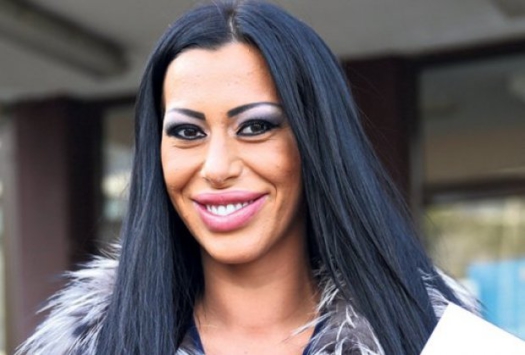
The world’s tallest residing man and woman, though, do not hail from any of these nations.
The worldwide title Slivovitz is derived from Serbian. Plum and its merchandise are of great importance to Serbs and a part of quite a few customs. A Serbian meal often begins or ends with plum products and Šljivovica is served as an aperitif. A saying goes that the best place to build a house is the place a plum tree grows best.
Jasenovac camp was one of many largest extermination camps in Europe and it has been known as “the Auschwitz of the Balkans”. The present-day presidents of Croatia, Stjepan Mesić and Ivo Josipović, in addition to Bakir Izetbegović, Bosniak Member of the Presidency of Bosnia and Herzegovina, also described the persecutions of Serbs in NDH as genocide. Sisak and Jastrebarsko focus camp had been specifically formed for youngsters.
During the First Serbian Uprising, led by Duke Karađorđe Petrović, Serbia was impartial for nearly a decade earlier than the Ottoman army was able to reoccupy the nation. Shortly after this, the Second Serbian Uprising began. Led by Miloš Obrenović, it ended in 1815 with a compromise between Serbian revolutionaries and Ottoman authorities.
Attitude in the direction of overseas men
In 1914, a younger Bosnian Serb student named Gavrilo Princip assassinated Archduke Franz Ferdinand of Austria, which immediately contributed to the outbreak of World War I. In the fighting that ensued, Serbia was invaded by Austria-Hungary. Despite being outnumbered, the Serbs subsequently defeated the Austro-Hungarians at the Battle of Cer, which marked the first Allied victory over the Central Powers within the war. Further victories on the battles of Kolubara and the Drina meant that Serbia remained unconquered as the warfare entered its second year. However, an invasion by the forces of Germany, Austria-Hungary and Bulgaria overwhelmed the Serbs within the winter of 1915, and a subsequent withdrawal by the Serbian Army by way of Albania took the lives of more than 240,000 Serbs. Serb forces spent the remaining years of the struggle preventing on the Salonika Front in Greece, before liberating Serbia from Austro-Hungarian occupation in November 1918.

Serbia
The battle most probably led to a stalemate, and afterwards Serbia loved a brief interval of prosperity underneath despot Stefan Lazarević and resisted falling to the Turks until 1459. The Serbs share many cultural traits with the remainder of the peoples of Southeast Europe. They are predominantly Eastern Orthodox Christians by faith. The Serbian language is official in Serbia, co-official in Kosovo and Bosnia and Herzegovina, and is spoken by the plurality in Montenegro.
The medieval power and influence of Serbia culminated in the reign of Stefan Dušan, who dominated the state from 1331 until his dying in 1355. Ruling as Emperor from 1346, his territory included Macedonia, northern Greece, Montenegro, and virtually all of Albania. When Dušan died, his son Stephen Uroš V became Emperor. In 1389, the Serbs confronted the Ottomans on the Battle of Kosovo on the plain of Kosovo Polje, near the city of Pristina.